Just Believe Him: The Only Requirement
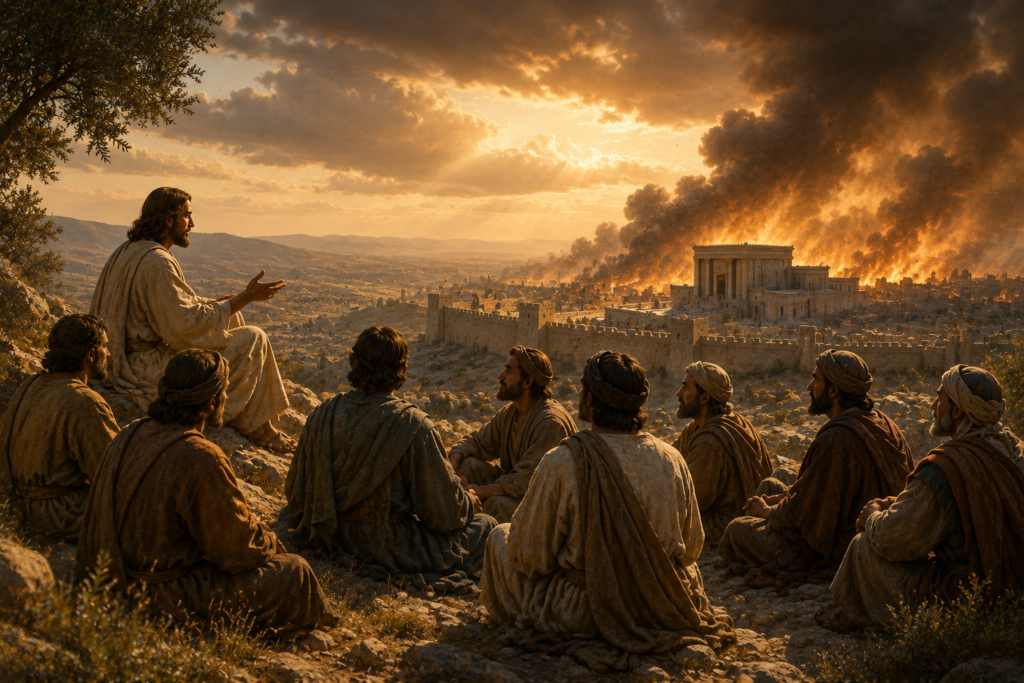
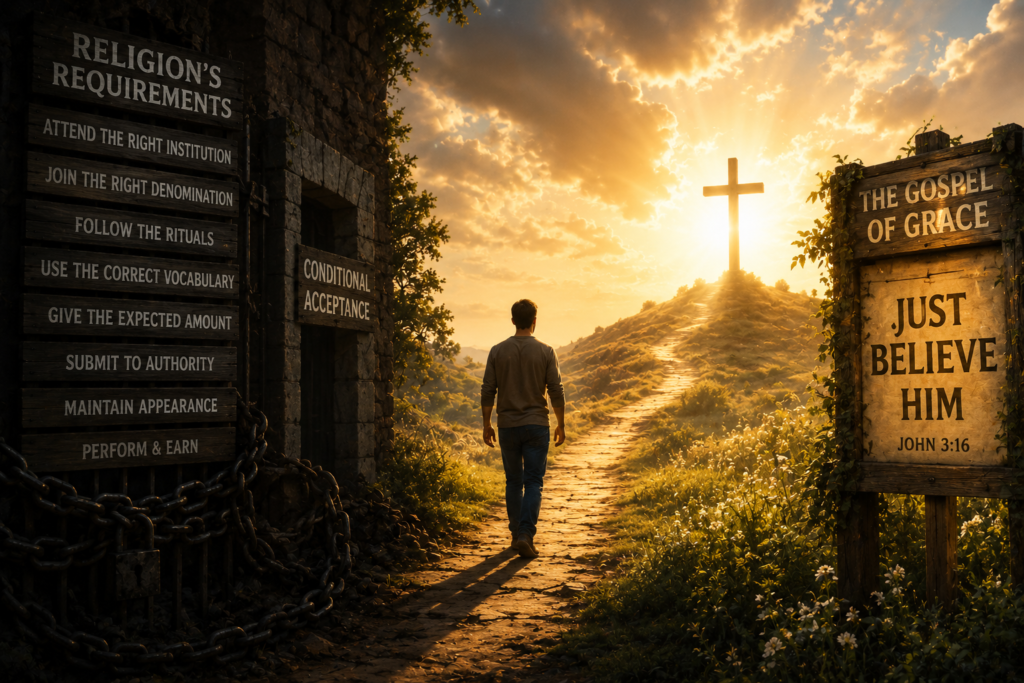
Religion has a remarkable ability to turn good news into a system of requirements. Instead of announcing what God has accomplished, it often gives people a list of tasks they must perform before they can feel accepted. Attend the correct institution. Join the correct denomination. Follow the approved rituals. Use the correct vocabulary. Give the expected amount. Demonstrate the required emotion. Submit to a religious authority. Maintain a certain public appearance. Under this system, peace with God always feels conditional.The gospel of Jesus Christ presents a different foundation. Its emphasis is not on humanity completing an unfinished divine project. Its emphasis is on trusting what God has already done through Christ. Jesus did not come merely to create another religious institution. He came to reveal the Father, confront sin and death, fulfill covenant promises, and establish reconciliation. John 3:16 presents the message in direct language: God loved the world and gave his Son so that the one who believes in him would have life. The verse does not describe a complicated religious entrance examination. It points to trust. The focus is not on confidence in personal performance but on confidence in Christ. Belief is sometimes misunderstood as intellectual agreement with a list of doctrines. In the biblical sense, belief includes trust, reliance, and confidence. To believe Jesus is to take his words seriously. It is to trust his character, his promises, his finished work, and his revelation of God. The Gospel Revolution emphasizes this point because religious systems frequently add requirements that Jesus did not make central. Baptism can be a meaningful testimony, but it should not become a ticket sold by an institution. Gathering with other believers can provide friendship, teaching, service, and encouragement, but attendance should not be used to measure whether God accepts someone. Giving can express generosity, but it should not become payment for spiritual access. The same concern applies to clergy. Teachers, pastors, and leaders may serve valuable roles, but they are not mediators who control access to God. The gospel declares that the barrier between humanity and the Father has been addressed through Christ. No religious professional owns that relationship. This message does not promote isolation, selfishness, or moral indifference. Trust in Christ should produce love, humility, honesty, forgiveness, generosity, and concern for others. The difference is the order. Good actions are not payments that purchase acceptance. They are responses to grace. Religion begins with deficiency: “You are not accepted unless you perform.” The gospel begins with divine action: “God has acted in Christ; trust the good news.” Religion keeps people dependent on the institution. The gospel creates confidence in God. Many believers struggle to experience peace because they have been trained to examine themselves continually for evidence that they have done enough. They remember every failure, question every motive, and fear that God’s acceptance may disappear. Religious environments can intensify this anxiety by making certainty dependent on perfect doctrine, emotional experiences, or visible obedience. The finished work of Christ offers another way. If reconciliation depends primarily on Christ, then human weakness does not surprise God or cancel his purpose. Believers can acknowledge failure honestly without imagining that every mistake rebuilds the barrier Christ removed. Repentance becomes a movement toward truth and healing rather than an attempt to persuade an unwilling God to become merciful. Trusting Jesus also means trusting his timeline and prophetic words. The Gospel Revolution connects belief with Matthew 24:34. When Jesus said that his generation would not pass away before the events he described occurred, the ministry argues that believers should take him seriously. Trust should not disappear when his words challenge inherited traditions. This is why “just believe him” carries more depth than a motivational slogan. It challenges the authority of institutional assumptions. It asks whether Christians are willing to trust Jesus even when his statements conflict with familiar prophetic systems, denominational expectations, or religious customs. Belief also creates freedom from spiritual comparison. Religious culture often encourages people to measure themselves against others. One person appears more devoted, more knowledgeable, more emotional, more disciplined, or more publicly successful. But the gospel directs attention away from comparison and toward Christ. The basis of confidence is not superiority over another believer. It is the faithfulness of Jesus. This freedom should create compassion. When people no longer need to prove their spiritual worth, they can stop treating others as competitors or threats. They can listen, serve, forgive, and learn. They can disagree without imagining that every disagreement determines eternal destiny. The message is equally important for people who have been harmed by religious institutions. Some have experienced manipulation, shame, financial pressure, abuse of authority, or exclusion. They may assume that rejecting those systems means rejecting God. The gospel offers hope that God is not limited to the institution that wounded them. Christ is not owned by a denomination, building, leadership structure, or religious brand. Direct access to God does not mean that wisdom, community, or accountability have no value. It means those gifts should serve people rather than control them. Healthy community points people toward God; unhealthy religion makes people dependent on itself. To believe Jesus is therefore to rest in his sufficiency. It is to stop adding barriers he removed. It is to stop postponing a reconciliation he accomplished. It is to stop imagining that God’s love must be unlocked by religious performance. The gospel is good news because God acted first. Christ did not wait for humanity to become worthy. He entered human history, identified with human weakness, confronted the power of sin and death, and completed his mission. Faith receives that announcement. There will always be people who prefer complex systems because systems create control. They allow institutions to decide who belongs, who speaks, who receives, and who is approved. The simplicity of trust threatens such control because it places the relationship between God and humanity in the hands of Christ.“Just believe him” does not mean refusing to study, ask questions, or grow. It means that study, questions,