
Author name: Shean-s

Blog

Just Believe Him: The Only Requirement

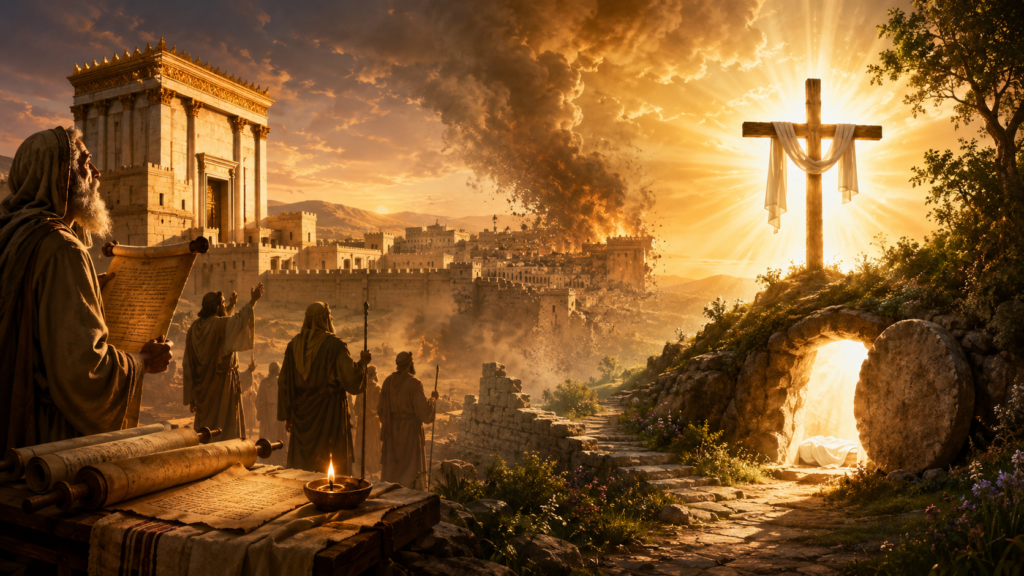
Religion has a remarkable ability to turn good news into a system of requirements. Instead of announcing what God has accomplished, it often gives people a list of tasks they must perform before they can feel accepted. Attend the correct institution. Join the correct denomination. Follow the approved rituals. Use the correct vocabulary. Give the expected amount. Demonstrate the required emotion. Submit to a religious authority. Maintain a certain public appearance. Under this system, peace with God always feels conditional.The gospel of Jesus Christ presents a different foundation. Its emphasis is not on humanity completing an unfinished divine project. Its emphasis is on trusting what God has already done through Christ. Jesus did not come merely to create another religious institution. He came to reveal the Father, confront sin and death, fulfill covenant promises, and establish reconciliation. John 3:16 presents the message in direct language: God loved the world and gave his Son so that the one who believes in him would have life. The verse does not describe a complicated religious entrance examination. It points to trust. The focus is not on confidence in personal performance but on confidence in Christ. Belief is sometimes misunderstood as intellectual agreement with a list of doctrines. In the biblical sense, belief includes trust, reliance, and confidence. To believe Jesus is to take his words seriously. It is to trust his character, his promises, his finished work, and his revelation of God. The Gospel Revolution emphasizes this point because religious systems frequently add requirements that Jesus did not make central. Baptism can be a meaningful testimony, but it should not become a ticket sold by an institution. Gathering with other believers can provide friendship, teaching, service, and encouragement, but attendance should not be used to measure whether God accepts someone. Giving can express generosity, but it should not become payment for spiritual access. The same concern applies to clergy. Teachers, pastors, and leaders may serve valuable roles, but they are not mediators who control access to God. The gospel declares that the barrier between humanity and the Father has been addressed through Christ. No religious professional owns that relationship. This message does not promote isolation, selfishness, or moral indifference. Trust in Christ should produce love, humility, honesty, forgiveness, generosity, and concern for others. The difference is the order. Good actions are not payments that purchase acceptance. They are responses to grace. Religion begins with deficiency: “You are not accepted unless you perform.” The gospel begins with divine action: “God has acted in Christ; trust the good news.” Religion keeps people dependent on the institution. The gospel creates confidence in God. Many believers struggle to experience peace because they have been trained to examine themselves continually for evidence that they have done enough. They remember every failure, question every motive, and fear that God’s acceptance may disappear. Religious environments can intensify this anxiety by making certainty dependent on perfect doctrine, emotional experiences, or visible obedience. The finished work of Christ offers another way. If reconciliation depends primarily on Christ, then human weakness does not surprise God or cancel his purpose. Believers can acknowledge failure honestly without imagining that every mistake rebuilds the barrier Christ removed. Repentance becomes a movement toward truth and healing rather than an attempt to persuade an unwilling God to become merciful. Trusting Jesus also means trusting his timeline and prophetic words. The Gospel Revolution connects belief with Matthew 24:34. When Jesus said that his generation would not pass away before the events he described occurred, the ministry argues that believers should take him seriously. Trust should not disappear when his words challenge inherited traditions. This is why “just believe him” carries more depth than a motivational slogan. It challenges the authority of institutional assumptions. It asks whether Christians are willing to trust Jesus even when his statements conflict with familiar prophetic systems, denominational expectations, or religious customs. Belief also creates freedom from spiritual comparison. Religious culture often encourages people to measure themselves against others. One person appears more devoted, more knowledgeable, more emotional, more disciplined, or more publicly successful. But the gospel directs attention away from comparison and toward Christ. The basis of confidence is not superiority over another believer. It is the faithfulness of Jesus. This freedom should create compassion. When people no longer need to prove their spiritual worth, they can stop treating others as competitors or threats. They can listen, serve, forgive, and learn. They can disagree without imagining that every disagreement determines eternal destiny. The message is equally important for people who have been harmed by religious institutions. Some have experienced manipulation, shame, financial pressure, abuse of authority, or exclusion. They may assume that rejecting those systems means rejecting God. The gospel offers hope that God is not limited to the institution that wounded them. Christ is not owned by a denomination, building, leadership structure, or religious brand. Direct access to God does not mean that wisdom, community, or accountability have no value. It means those gifts should serve people rather than control them. Healthy community points people toward God; unhealthy religion makes people dependent on itself. To believe Jesus is therefore to rest in his sufficiency. It is to stop adding barriers he removed. It is to stop postponing a reconciliation he accomplished. It is to stop imagining that God’s love must be unlocked by religious performance. The gospel is good news because God acted first. Christ did not wait for humanity to become worthy. He entered human history, identified with human weakness, confronted the power of sin and death, and completed his mission. Faith receives that announcement. There will always be people who prefer complex systems because systems create control. They allow institutions to decide who belongs, who speaks, who receives, and who is approved. The simplicity of trust threatens such control because it places the relationship between God and humanity in the hands of Christ.“Just believe him” does not mean refusing to study, ask questions, or grow. It means that study, questions,
Blog

Understanding the Olivet Discourse

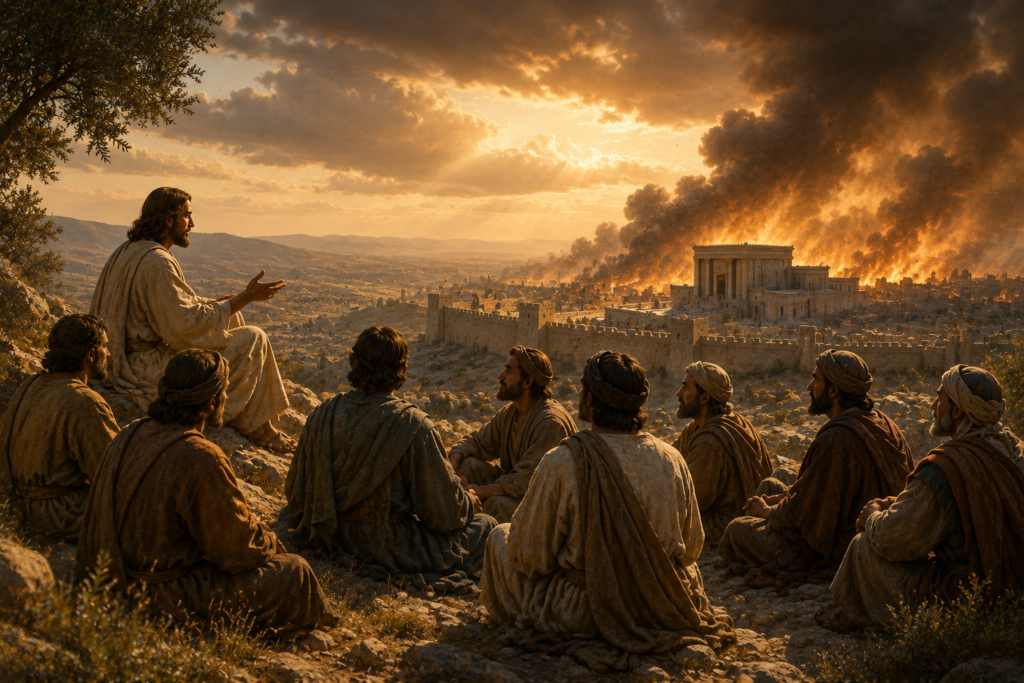
The Olivet Discourse is one of the most discussed and frequently misunderstood teachings of Jesus. Recorded in Matthew 24, Mark 13, and Luke 21, it contains vivid language about wars, earthquakes, persecution, false prophets, cosmic disturbance, judgment, and the coming of the Son of Man. Many modern readers approach these chapters as though Jesus were primarily describing events in the twenty-first century. However, the discourse begins with a specific conversation, a visible building, a particular audience, and a question rooted in first-century Jerusalem. Jesus and his disciples were leaving the Temple when the disciples drew his attention to its magnificent buildings. The Temple was not simply a place of worship. It represented Israel’s covenant identity, religious leadership, sacrificial system, national hope, and relationship with God. To the disciples, its destruction would have seemed almost unimaginable. Yet Jesus responded by declaring that not one stone would be left upon another. The disciples later approached Jesus privately on the Mount of Olives. Their questions arose directly from his announcement about the Temple. They wanted to know when these events would occur and what signs would indicate that the predicted conclusion was approaching. The context therefore begins with Jerusalem, the Temple, and the generation to whom Jesus was speaking.Jesus warned his disciples not to be deceived by false messiahs. He told them they would hear of wars and rumors of wars. He described famines, earthquakes, persecution, betrayal, and the preaching of the gospel. These statements are often removed from their original context and treated as a checklist for modern headlines. But wars, political instability, natural disasters, religious deception, and persecution were not unknown in the first century. The important issue is not whether similar events can occur today. The important issue is identifying the audience Jesus addressed and the timeline he provided. Luke’s account offers particularly direct language. Where Matthew refers to the abomination of desolation, Luke speaks of Jerusalem being surrounded by armies. Jesus told those in Judea to flee to the mountains and warned those inside the city to leave. These were practical instructions for people living in a specific geographic location. They were not instructions for every believer throughout world history. A modern Christian living in Canada, Kenya, Pakistan, or Brazil cannot literally obey a command to flee from first-century Judea.The discourse also repeatedly uses second-person language. Jesus told the disciples that “you” would hear, “you” would see, “you” would be persecuted, and “you” would need to flee. Although Scripture continues to teach later generations, its original audience cannot be ignored. Jesus was preparing his followers for events that would directly affect their world. The key statement appears in Matthew 24:34: “This generation will not pass away until all these things take place.” Some interpreters redefine “generation” to mean the Jewish race, a future generation, or a symbolic group. Yet throughout the Gospels, Jesus normally used the phrase “this generation” to describe his contemporaries. He criticized that generation for unbelief, warned it about judgment, and held it responsible for rejecting God’s messengers. Reading Matthew 24:34 in the same natural way provides a clear timeline.The dramatic cosmic language in the discourse does not necessarily require the physical destruction of the universe. The Hebrew prophets frequently used images of a darkened sun, falling stars, shaken heavens, and collapsing powers to describe the judgment of nations and rulers. Jesus was speaking within that prophetic tradition. His audience would have recognized that cosmic imagery could communicate the fall of a political and covenant order. The “coming of the Son of Man” should also be understood within its biblical background. The phrase draws heavily from Daniel 7, where the Son of Man comes to the Ancient of Days and receives authority, dominion, and a kingdom. The movement in Daniel is toward God’s throne, not necessarily from heaven to earth. The language emphasizes royal vindication and authority. From this perspective, the judgment on Jerusalem publicly demonstrated that Jesus was the true Messiah and that his warnings were reliable.This interpretation does not require denying every future hope or reducing the significance of Christ. Instead, it seeks to honor the immediate context of the discourse. Jesus was not giving his disciples irrelevant information about events thousands of years beyond their lives. He was preparing them for the end of the covenant world they had always known. The destruction of the Temple in AD 70 created a historical boundary that permanently changed Judaism and the early Christian movement. The sacrificial system stopped. The priesthood could no longer function as it had. Jerusalem was devastated. The visible center of the old covenant order disappeared. These events match the subject that began the Olivet Discourse: the destruction of the Temple.Understanding the discourse in its first-century setting also changes its spiritual impact. Instead of producing endless fear about the next war, earthquake, or technological development, it builds confidence in the reliability of Jesus. He accurately warned his disciples about the judgment coming upon their generation. His words were not postponed, redefined, or forgotten. The discourse also teaches courage. Jesus told his followers that they would face opposition, but he promised that endurance and faithfulness mattered. They were not to follow false messiahs or panic when political instability increased. They were to trust his words even when the surrounding religious establishment rejected them.Modern believers can still learn deeply from the Olivet Discourse. They can learn to read Scripture in context, resist sensationalism, remain faithful during social upheaval, and trust that Jesus keeps his promises. The application is not found by pretending that every warning was originally addressed to the present generation. It is found by understanding what Jesus accomplished and allowing that fulfillment to strengthen faith today.The Olivet Discourse is not an unsolved puzzle placed in the Bible to generate fear. It is a historically grounded teaching about covenant judgment, the vindication of Christ, and the reliability of his prophetic word. When the audience, setting, and timeline are respected, the passage becomes clearer. Jesus meant what he said, and the generation that

Blog

70 AD Fulfillment: It Really Happened

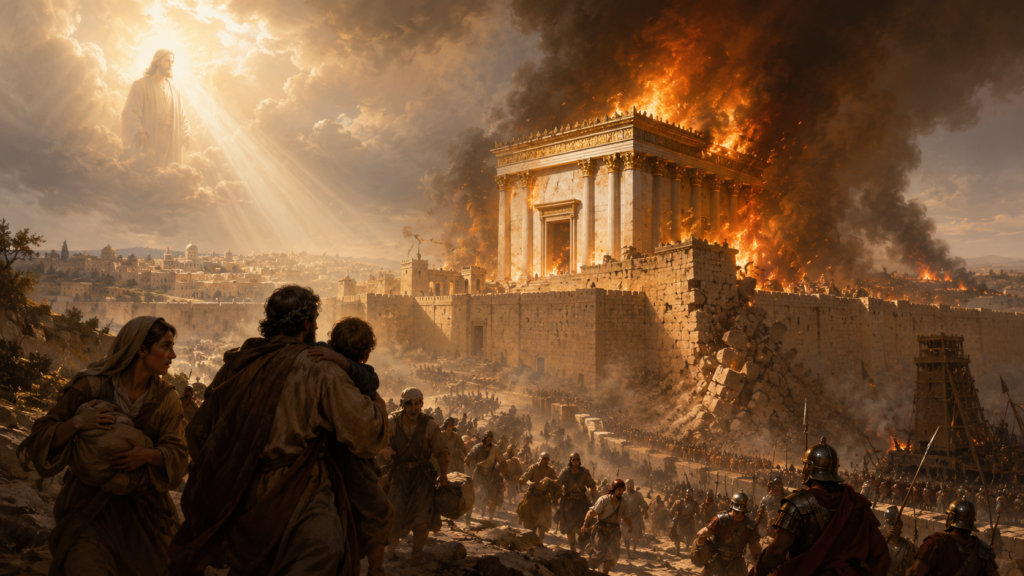
AD 70 is one of the most significant dates in biblical and religious history, yet many Christians know very little about it. The destruction of Jerusalem and its Temple brought an irreversible conclusion to the world in which Jesus and the apostles had ministered. The events were not minor political disturbances. They transformed Jewish religious life, ended the functioning Temple system, and confirmed the warnings Jesus had delivered to his generation. To understand the importance of AD 70, it is necessary to understand what the Temple represented. It was the center of sacrifice, priestly service, national worship, pilgrimage, and covenant identity. Its courts, ceremonies, and leadership structures shaped the religious world of first-century Judaism. When Jesus confronted the Temple authorities, cleansed the Temple courts, and announced judgment against Jerusalem, he was challenging the most powerful religious institution of his society.Jesus did not treat the Temple as though it would remain permanently untouched. He told his disciples that its stones would be thrown down. He lamented over Jerusalem and warned that its house would be left desolate. In the Olivet Discourse, he described a coming period of distress and instructed those in Judea to flee when the danger became visible. These statements were spoken before the Roman-Jewish conflict that eventually brought Jerusalem to ruin. The war that began in the late AD 60s grew out of political tension, Roman rule, internal division, national resistance, and religious expectation. Jerusalem became the center of resistance. Roman forces eventually surrounded the city, and the conflict ended with catastrophic destruction. The Temple was burned, the city was devastated, and the old sacrificial order could no longer continue.From the Gospel Revolution perspective, these events were the historical fulfillment of Jesus’ warnings. His prophecy was not delayed for thousands of years. The judgment occurred within the generation he addressed. The people who heard his words lived during the period in which the old covenant system reached its visible end. This interpretation gives special importance to Matthew 24:34: “This generation will not pass away until all these things take place.” Rather than redefining the expression to refer to distant people, the Gospel Revolution reads it as a normal reference to Jesus’ contemporaries. The destruction of Jerusalem in AD 70 fits that timeline.The importance of fulfillment is not limited to proving that a prediction came true. The event revealed a major covenant transition. The old system had depended on a physical Temple, repeated sacrifices, a specialized priesthood, and geographic access to Jerusalem. The gospel announced something radically different: reconciliation through Christ, direct access to God, and a people defined by faith rather than by a religious institution. The end of the Temple system demonstrated that the work of Christ could not be contained within the old structure. Jesus had presented himself as greater than the Temple. His sacrifice did not need to be repeated. His priesthood did not depend on the lineage or rituals of the Jerusalem establishment. His kingdom was not controlled by the religious authorities who opposed him.This is why AD 70 matters to the message of freedom. If the old covenant system remained divinely necessary, people would still require its sacrifices, priests, ceremonies, and sacred location. But history shows that the Temple order ended. Christianity continued without it because the gospel was not dependent on it. The work of Christ had created a new reality. The fulfillment interpretation also addresses the repeated time statements of the New Testament. The original readers were told that certain events were near, shortly to occur, or approaching. These expressions carried urgency. They were not naturally understood as descriptions of events thousands of years away. AD 70 provides a historical setting in which such language makes sense.Some Christians object that the destruction of Jerusalem was not large enough to fulfill the dramatic language of prophecy. However, biblical prophecy often describes the fall of nations and covenant orders in cosmic terms. The darkening of the sun, shaking of the heavens, and falling of stars can symbolize the collapse of rulers, authorities, and established powers. For the Jewish world centered on the Temple, its destruction was genuinely earth-shaking. Others argue that the coming of Christ must always refer to a physical descent visible to the entire planet. Yet Scripture uses “coming” language in multiple ways, including divine judgment, royal authority, covenant visitation, and vindication. The judgment on Jerusalem publicly confirmed the authority of Jesus and the truth of his warnings.AD 70 should therefore not be treated as an embarrassing or irrelevant historical footnote. It is central to understanding the relationship between Jesus, the Temple, the old covenant, and the new covenant. It shows that the New Testament was written within a real historical transition rather than in an abstract theological vacuum.This interpretation can also free believers from fear-based prophecy teaching. Many people have been taught to interpret every conflict, disaster, disease, or political development as evidence that the end is immediately approaching. Such predictions repeatedly fail, but the system continues by moving the timeline forward. A fulfilled perspective returns attention to the events Jesus actually described and to the generation he actually addressed.The result is not hopelessness. It is confidence. Jesus did not fail to keep his word. The promised judgment occurred. The Temple age ended. The message of reconciliation moved beyond Jerusalem and religious control. The gospel became openly available without dependence on a sacred building or institutional mediator. This understanding also changes the purpose of Christian life. Believers are not called to wait passively for God’s kingdom to begin. They are invited to live from the reality of Christ’s completed work. They can serve, love, teach, forgive, create, and build without imagining that history is controlled by an unfinished prophetic countdown.AD 70 happened. Jerusalem fell. The Temple was destroyed. The religious world of the first century changed permanently. For the Gospel Revolution, these events demonstrate that Jesus meant what he said and accomplished what he came to accomplish. The question is no longer simply, “What will happen someday?” A more

Blog

4,000 Years of Waiting for Something Already Done

For generations, Christians have been taught to live in a state of expectation. They are told that the most important promises of Scripture are still waiting to be fulfilled, that the decisive work of God remains unfinished, and that Jesus must return someday to complete what he began. This way of thinking has created a faith built around delay. Believers are encouraged to watch the news, interpret international conflicts as prophetic signs, and wait for events that are always described as being just around the corner. But what if the New Testament presents a very different message? What if the promises that were future to the Old Testament prophets became present realities through the life, death, resurrection, and judgment ministry of Jesus Christ?The Old Testament is filled with expectation. Its prophets looked forward to the coming of the Messiah, the establishment of righteousness, the defeat of sin, the restoration of God’s people, and the arrival of a new covenant. These promises were not vague religious hopes without a timeline. They were connected to Israel’s covenant history and pointed toward a specific redemptive climax. The prophets were looking forward, but the writers of the New Testament consistently announced that the long-awaited time had arrived. Jesus declared that the kingdom of God had drawn near. The apostles proclaimed that the promised age was breaking into history. They were not announcing the beginning of another indefinite period of waiting. They were declaring that God was completing what the prophets had anticipated. This raises an important question: why do so many believers continue to treat fulfilled promises as future possibilities? Part of the answer is tradition. Once a theological system becomes established, generations inherit its assumptions without re-examining the original context of Scripture. A verse is often interpreted according to what a church tradition teaches rather than according to the audience, language, and historical setting in which it was first spoken. As a result, statements that originally addressed first-century believers are transferred to modern readers as though two thousand years had no significance.Matthew 24:34 stands at the center of this discussion. After describing dramatic events connected with Jerusalem, the Temple, persecution, judgment, and the coming of the Son of Man, Jesus said, “Truly I say to you, this generation will not pass away until all these things take place.” The natural meaning of “this generation” is the generation standing before him. Jesus had been speaking directly to his disciples, answering their questions about the Temple they could see with their own eyes. He warned them about events they would personally face and gave them instructions that made sense within their historical environment. If Jesus meant a generation thousands of years in the future, his words would have offered little practical help to the disciples who originally heard them. But when the statement is read naturally, it becomes clear and urgent. Jesus was warning his own generation that the old covenant world centered on Jerusalem and the Temple was approaching its conclusion. His followers needed to recognize the signs, remain faithful, and understand that the coming judgment would confirm his authority and vindicate his message.The destruction of Jerusalem in AD 70 therefore becomes more than an isolated historical tragedy. From the Gospel Revolution perspective, it represents the visible conclusion of the covenant age Jesus had confronted throughout his ministry. The Temple, priesthood, sacrifices, and institutional system that had defined Israel’s religious life were brought to an end. This did not mean that God had abandoned humanity. It meant that access to God was no longer organized around a physical sanctuary, a geographic location, or a religious class. The New Testament repeatedly presents the work of Christ as complete and effective. Jesus did not merely make salvation possible while leaving humanity to finish the process through religious performance. He entered history to accomplish reconciliation. His death addressed sin, his resurrection defeated death, and his kingdom established a new relationship between God and humanity. The gospel is good news precisely because it announces what God has done, not an unfinished religious assignment that people must complete.A future-only interpretation can unintentionally weaken the force of that message. When believers are constantly told that the decisive victory is still ahead, they may live as though Christ’s work was incomplete. Fear replaces assurance. Prophecy becomes an endless search for disasters. Faith becomes attached to speculation rather than to the finished work of Jesus. The New Testament, however, calls believers to live from victory, reconciliation, and confidence. This does not mean that human history has no suffering or that every problem disappeared in the first century. It means that the central redemptive promises of Scripture reached their fulfillment in Christ and in the covenant transition he announced. People still experience grief, injustice, conflict, and death, but these realities do not prove that Jesus failed to accomplish his mission. The gospel addresses humanity’s deepest separation from God and declares that the barrier has been removed.Understanding fulfillment changes the way Scripture is read. The Old Testament becomes the story of expectation. The Gospels record the arrival of the promised Messiah. The letters explain the meaning of his work during a transitional generation. Revelation describes the approaching judgment and victory that its original readers were told was near. Instead of stretching urgent first-century language across thousands of years, the reader can allow the biblical timeline to speak for itself.The message is not that Christians should stop caring about the future. It is that they should stop postponing the good news. God is not waiting to become reconciled to humanity. Christ is not waiting to become victorious. The kingdom is not waiting for permission to begin. The gospel announces a finished work that can be trusted now. For nearly two thousand years, many people have waited for something the New Testament presents as already accomplished. The Gospel Revolution invites readers to reconsider that assumption. What if Jesus meant what he said? What if the prophets were fulfilled, the covenant age reached its conclusion, and

Blog

Did you know that Revelation was dated incorrectly and has already taken place?

The church father Irenaeus wrote in “Against Heresies” that Jesus was in his 50s when he was crucified. This is the same man who said John wrote Revelation in the 90’s A.D. during the reign of Trajan. Irenaeus is from the second century and is the main source that Christianity counts on for its dating of eschatological theology. If Irenaeus got it wrong about Jesus, then how can he be right about John writing Revelation during the reign of Trajan? That being the case means that Revelation has been misdated (Against Heresies, Book II, Chapter 22). The Problem Christian scholars count on the church fathers quite a bit to understand the apostles who came before the church fathers were born. The church fathers are middlemen who do not have any direct connection with the apostles. We don’t start hearing about the church fathers until the second century. How much can historic knowledge change in 100 years? One look at our US Constitution will prove that facts get changed and or misunderstood just a few years after a historical event. The Solution Revelation was written before the fall of Jerusalem because it revealed what would happen during the fall of Jerusalem. Revelation is a Jewish book and is replete with Jewish symbolism and spiritualism and eschatology. There are over one hundred of New Testament verses that have Jesus Christ’s return happening soon after he left to go back up to heaven. No verses exist that say that Jesus is gonna take thousands of years before he comes back. The false prophets of today keep messing up their predictions on interpretations of the Bible to prove that Jesus is coming back 2000 years after he said he was coming back soon. And Jesus understands what “soon” means, which doesn’t mean 2000 years.The angel had John measure the Temple in Revelation. There was no Temple to measure after 70 A.D. when it got destroyed by the Romans. That’s a pretty big clue that Revelation was written before 70 A.D. Irenaeus was as wrong about the dating of Revelation as he was about Christ’s age at his crucifixion. Summarize and Call to action It’s amazing to me that the church relies on one brief statement from a man who can’t get his facts straight. Even though external evidence can be helpful to Bible exposition, the Bible explains the Bible and doesn’t need man’s explanation of it. People have the propensity of allowing others to explain the Bible. When we allow others to teach us the Bible we absorb the teachers’ biases as well. When we trust one like Irenaeus for a whole theology who is proven wrong in theology, we become unsteady as that man. That is why it’s a good idea to read scripture without any paradigms guiding us such as pre-millennial dispensationalism. We must take a systematic approach to Scripture and not take it out of context to make it fit our understanding of the Bible. And that’s all there is to it!

Scroll to Top