AD 70 is one of the most significant dates in biblical and religious history, yet many Christians know very little about it. The destruction of Jerusalem and its Temple brought an irreversible conclusion to the world in which Jesus and the apostles had ministered. The events were not minor political disturbances. They transformed Jewish religious life, ended the functioning Temple system, and confirmed the warnings Jesus had delivered to his generation.
To understand the importance of AD 70, it is necessary to understand what the Temple represented. It was the center of sacrifice, priestly service, national worship, pilgrimage, and covenant identity. Its courts, ceremonies, and leadership structures shaped the religious world of first-century Judaism. When Jesus confronted the Temple authorities, cleansed the Temple courts, and announced judgment against Jerusalem, he was challenging the most powerful religious institution of his society.
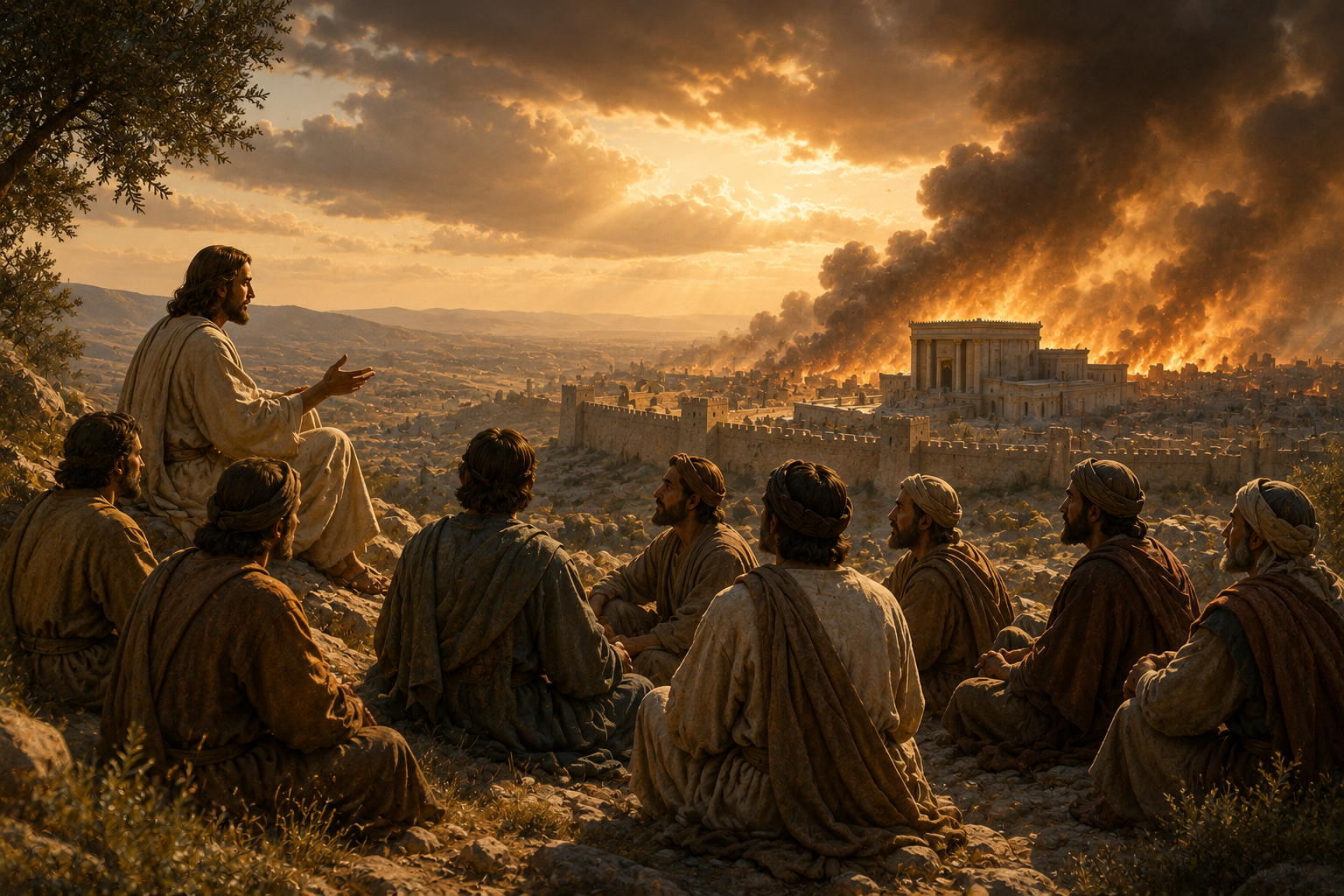
Jesus did not treat the Temple as though it would remain permanently untouched. He told his disciples that its stones would be thrown down. He lamented over Jerusalem and warned that its house would be left desolate. In the Olivet Discourse, he described a coming period of distress and instructed those in Judea to flee when the danger became visible. These statements were spoken before the Roman-Jewish conflict that eventually brought Jerusalem to ruin.
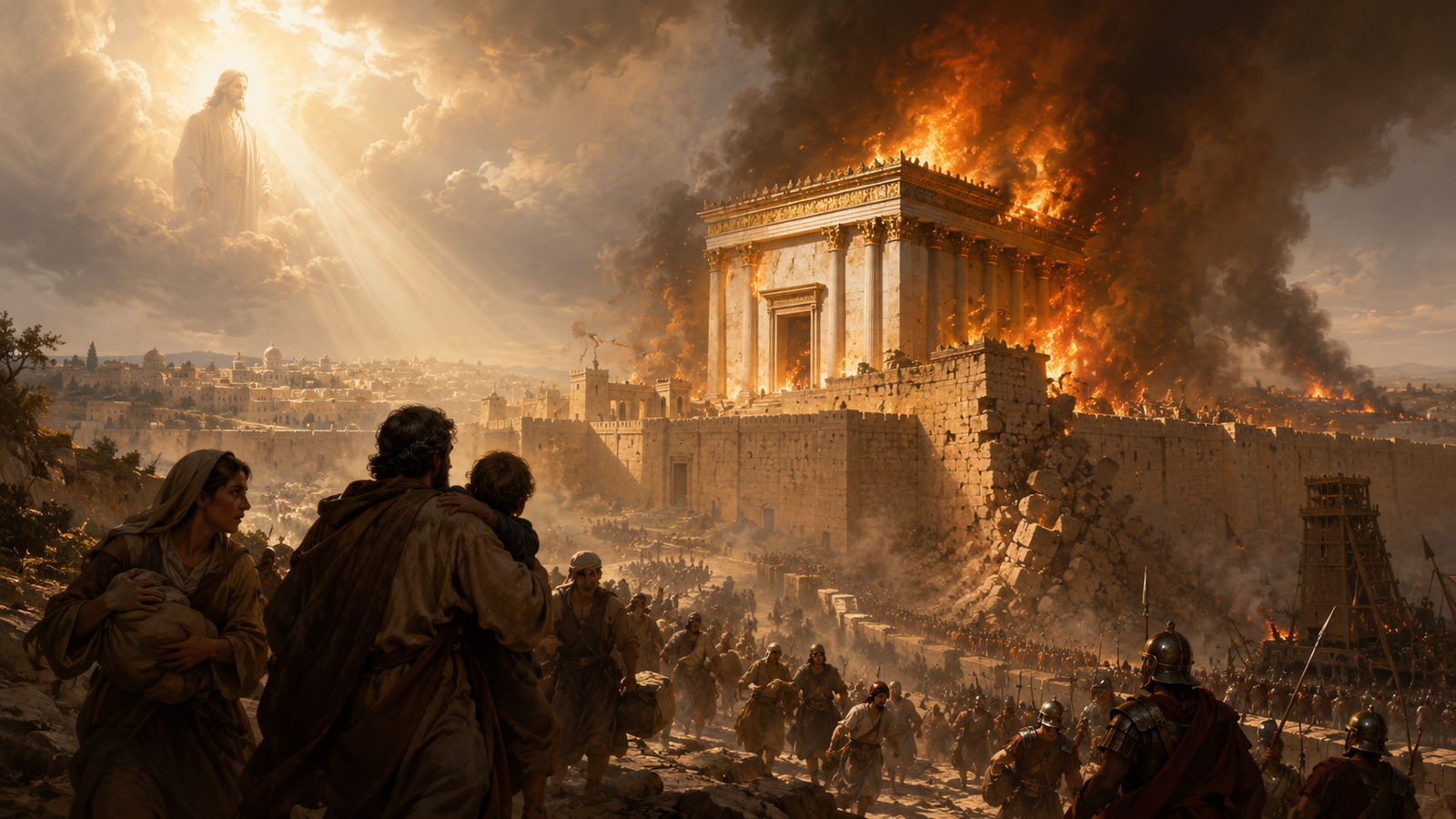
The war that began in the late AD 60s grew out of political tension, Roman rule, internal division, national resistance, and religious expectation. Jerusalem became the center of resistance. Roman forces eventually surrounded the city, and the conflict ended with catastrophic destruction. The Temple was burned, the city was devastated, and the old sacrificial order could no longer continue.
From the Gospel Revolution perspective, these events were the historical fulfillment of Jesus’ warnings. His prophecy was not delayed for thousands of years. The judgment occurred within the generation he addressed. The people who heard his words lived during the period in which the old covenant system reached its visible end.
This interpretation gives special importance to Matthew 24:34: “This generation will not pass away until all these things take place.” Rather than redefining the expression to refer to distant people, the Gospel Revolution reads it as a normal reference to Jesus’ contemporaries. The destruction of Jerusalem in AD 70 fits that timeline.
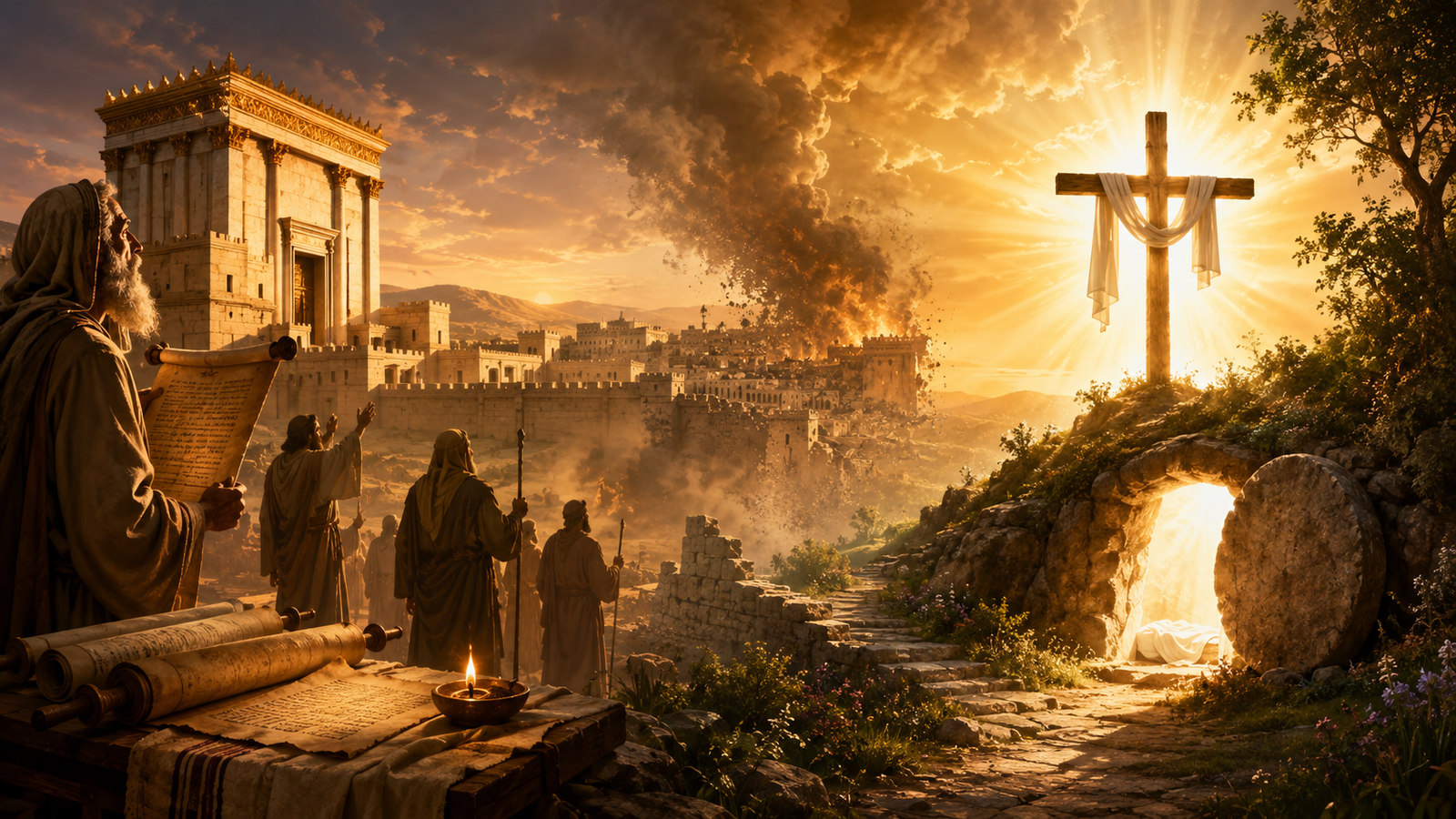
The importance of fulfillment is not limited to proving that a prediction came true. The event revealed a major covenant transition. The old system had depended on a physical Temple, repeated sacrifices, a specialized priesthood, and geographic access to Jerusalem. The gospel announced something radically different: reconciliation through Christ, direct access to God, and a people defined by faith rather than by a religious institution.
The end of the Temple system demonstrated that the work of Christ could not be contained within the old structure. Jesus had presented himself as greater than the Temple. His sacrifice did not need to be repeated. His priesthood did not depend on the lineage or rituals of the Jerusalem establishment. His kingdom was not controlled by the religious authorities who opposed him.
This is why AD 70 matters to the message of freedom. If the old covenant system remained divinely necessary, people would still require its sacrifices, priests, ceremonies, and sacred location. But history shows that the Temple order ended. Christianity continued without it because the gospel was not dependent on it. The work of Christ had created a new reality.
The fulfillment interpretation also addresses the repeated time statements of the New Testament. The original readers were told that certain events were near, shortly to occur, or approaching. These expressions carried urgency. They were not naturally understood as descriptions of events thousands of years away. AD 70 provides a historical setting in which such language makes sense.
Some Christians object that the destruction of Jerusalem was not large enough to fulfill the dramatic language of prophecy. However, biblical prophecy often describes the fall of nations and covenant orders in cosmic terms. The darkening of the sun, shaking of the heavens, and falling of stars can symbolize the collapse of rulers, authorities, and established powers. For the Jewish world centered on the Temple, its destruction was genuinely earth-shaking.
Others argue that the coming of Christ must always refer to a physical descent visible to the entire planet. Yet Scripture uses “coming” language in multiple ways, including divine judgment, royal authority, covenant visitation, and vindication. The judgment on Jerusalem publicly confirmed the authority of Jesus and the truth of his warnings.
AD 70 should therefore not be treated as an embarrassing or irrelevant historical footnote. It is central to understanding the relationship between Jesus, the Temple, the old covenant, and the new covenant. It shows that the New Testament was written within a real historical transition rather than in an abstract theological vacuum.
This interpretation can also free believers from fear-based prophecy teaching. Many people have been taught to interpret every conflict, disaster, disease, or political development as evidence that the end is immediately approaching. Such predictions repeatedly fail, but the system continues by moving the timeline forward. A fulfilled perspective returns attention to the events Jesus actually described and to the generation he actually addressed.
The result is not hopelessness. It is confidence. Jesus did not fail to keep his word. The promised judgment occurred. The Temple age ended. The message of reconciliation moved beyond Jerusalem and religious control. The gospel became openly available without dependence on a sacred building or institutional mediator.
This understanding also changes the purpose of Christian life. Believers are not called to wait passively for God’s kingdom to begin. They are invited to live from the reality of Christ’s completed work. They can serve, love, teach, forgive, create, and build without imagining that history is controlled by an unfinished prophetic countdown.
AD 70 happened. Jerusalem fell. The Temple was destroyed. The religious world of the first century changed permanently. For the Gospel Revolution, these events demonstrate that Jesus meant what he said and accomplished what he came to accomplish.
The question is no longer simply, “What will happen someday?” A more important question is, “What did Jesus already fulfill, and how should that fulfillment transform the way we understand the gospel today?”
The website explicitly connects the destruction of Jerusalem in AD 70 with Jesus’ generation and the end of the former religious order.