The Olivet Discourse is one of the most discussed and frequently misunderstood teachings of Jesus. Recorded in Matthew 24, Mark 13, and Luke 21, it contains vivid language about wars, earthquakes, persecution, false prophets, cosmic disturbance, judgment, and the coming of the Son of Man. Many modern readers approach these chapters as though Jesus were primarily describing events in the twenty-first century. However, the discourse begins with a specific conversation, a visible building, a particular audience, and a question rooted in first-century Jerusalem.
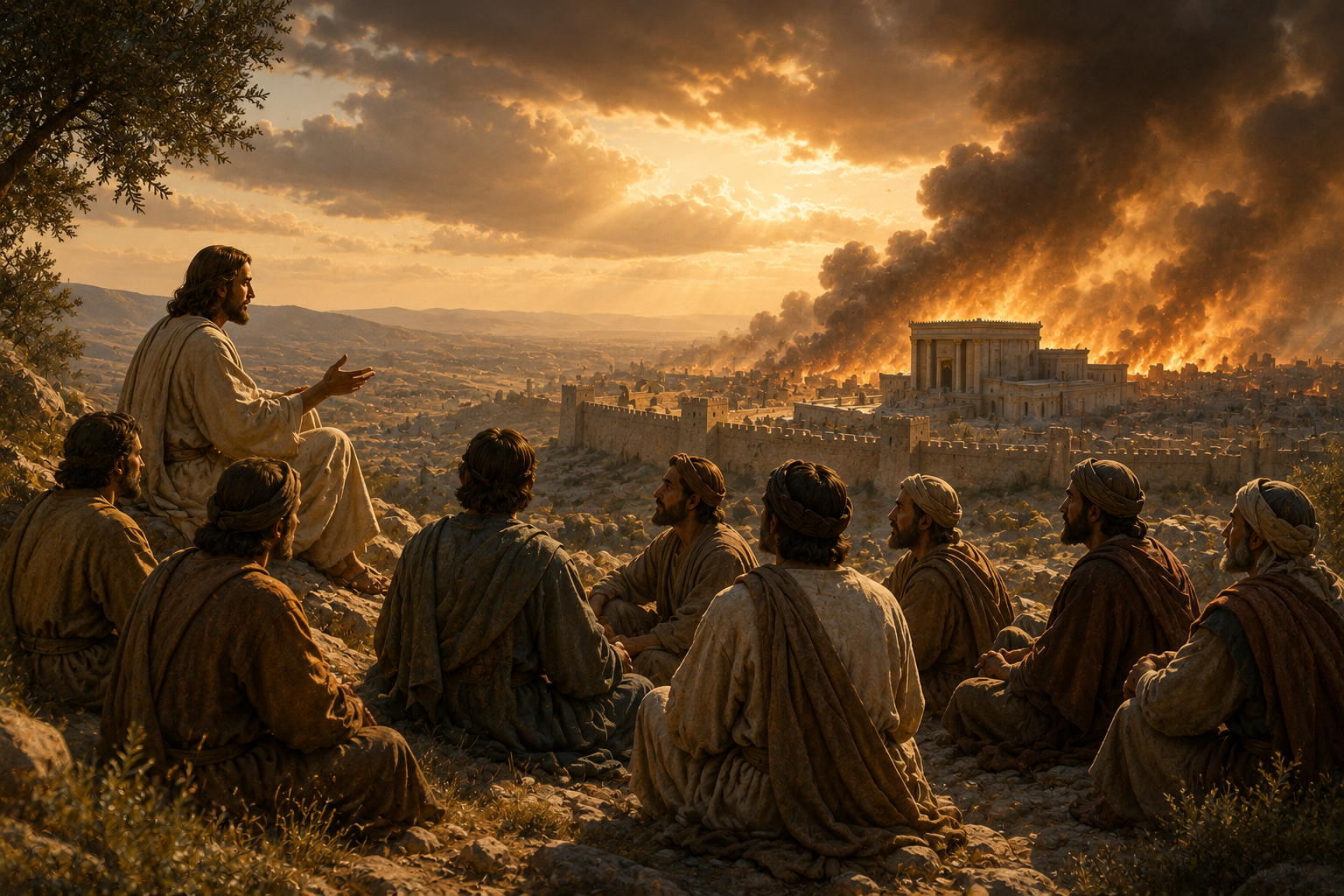
Jesus and his disciples were leaving the Temple when the disciples drew his attention to its magnificent buildings. The Temple was not simply a place of worship. It represented Israel’s covenant identity, religious leadership, sacrificial system, national hope, and relationship with God. To the disciples, its destruction would have seemed almost unimaginable. Yet Jesus responded by declaring that not one stone would be left upon another.
The disciples later approached Jesus privately on the Mount of Olives. Their questions arose directly from his announcement about the Temple. They wanted to know when these events would occur and what signs would indicate that the predicted conclusion was approaching. The context therefore begins with Jerusalem, the Temple, and the generation to whom Jesus was speaking.
Jesus warned his disciples not to be deceived by false messiahs. He told them they would hear of wars and rumors of wars. He described famines, earthquakes, persecution, betrayal, and the preaching of the gospel. These statements are often removed from their original context and treated as a checklist for modern headlines. But wars, political instability, natural disasters, religious deception, and persecution were not unknown in the first century. The important issue is not whether similar events can occur today. The important issue is identifying the audience Jesus addressed and the timeline he provided.
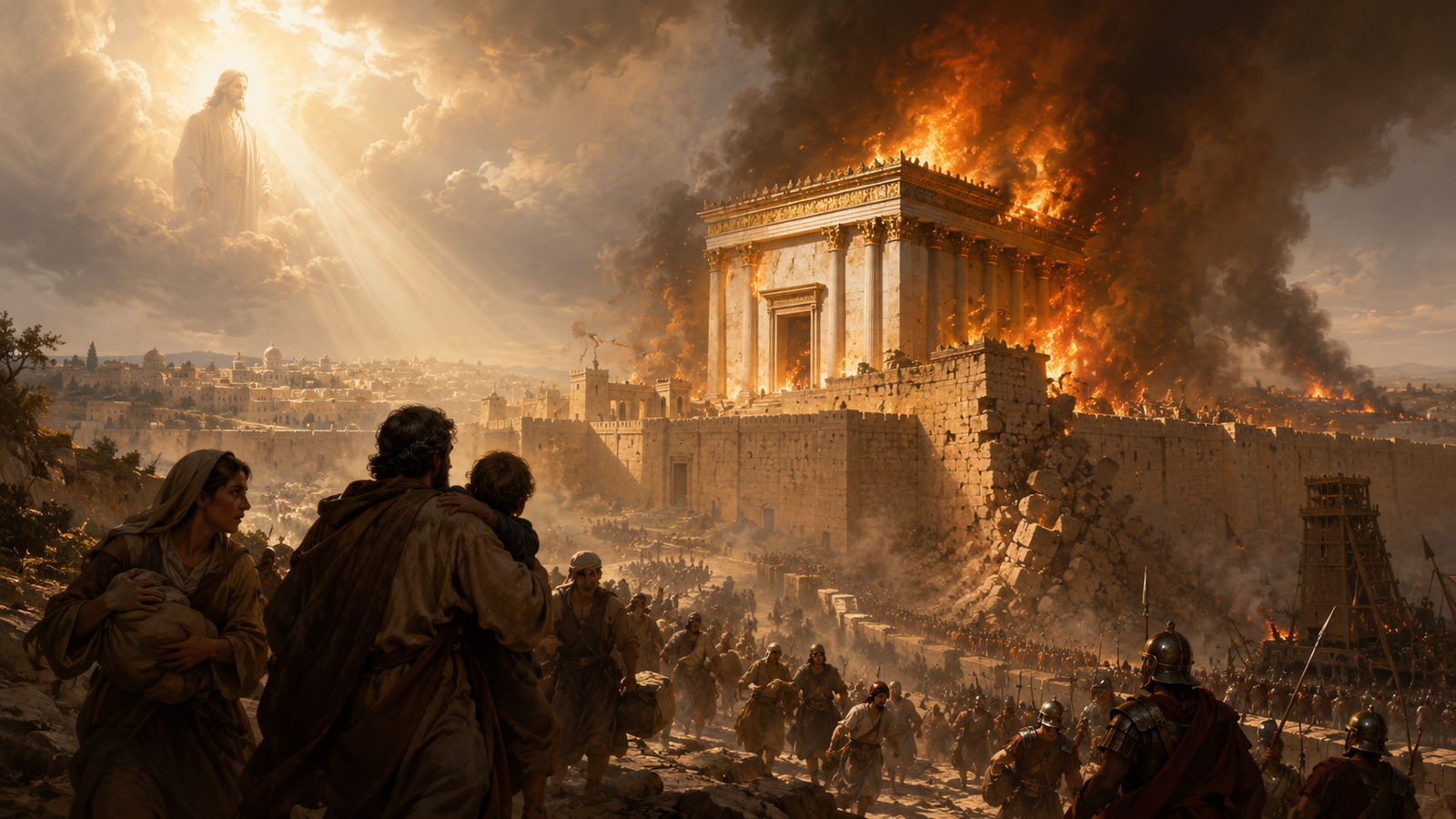
Luke’s account offers particularly direct language. Where Matthew refers to the abomination of desolation, Luke speaks of Jerusalem being surrounded by armies. Jesus told those in Judea to flee to the mountains and warned those inside the city to leave. These were practical instructions for people living in a specific geographic location. They were not instructions for every believer throughout world history. A modern Christian living in Canada, Kenya, Pakistan, or Brazil cannot literally obey a command to flee from first-century Judea.
The discourse also repeatedly uses second-person language. Jesus told the disciples that “you” would hear, “you” would see, “you” would be persecuted, and “you” would need to flee. Although Scripture continues to teach later generations, its original audience cannot be ignored. Jesus was preparing his followers for events that would directly affect their world.
The key statement appears in Matthew 24:34: “This generation will not pass away until all these things take place.” Some interpreters redefine “generation” to mean the Jewish race, a future generation, or a symbolic group. Yet throughout the Gospels, Jesus normally used the phrase “this generation” to describe his contemporaries. He criticized that generation for unbelief, warned it about judgment, and held it responsible for rejecting God’s messengers. Reading Matthew 24:34 in the same natural way provides a clear timeline.
The dramatic cosmic language in the discourse does not necessarily require the physical destruction of the universe. The Hebrew prophets frequently used images of a darkened sun, falling stars, shaken heavens, and collapsing powers to describe the judgment of nations and rulers. Jesus was speaking within that prophetic tradition. His audience would have recognized that cosmic imagery could communicate the fall of a political and covenant order.

The “coming of the Son of Man” should also be understood within its biblical background. The phrase draws heavily from Daniel 7, where the Son of Man comes to the Ancient of Days and receives authority, dominion, and a kingdom. The movement in Daniel is toward God’s throne, not necessarily from heaven to earth. The language emphasizes royal vindication and authority. From this perspective, the judgment on Jerusalem publicly demonstrated that Jesus was the true Messiah and that his warnings were reliable.
This interpretation does not require denying every future hope or reducing the significance of Christ. Instead, it seeks to honor the immediate context of the discourse. Jesus was not giving his disciples irrelevant information about events thousands of years beyond their lives. He was preparing them for the end of the covenant world they had always known.
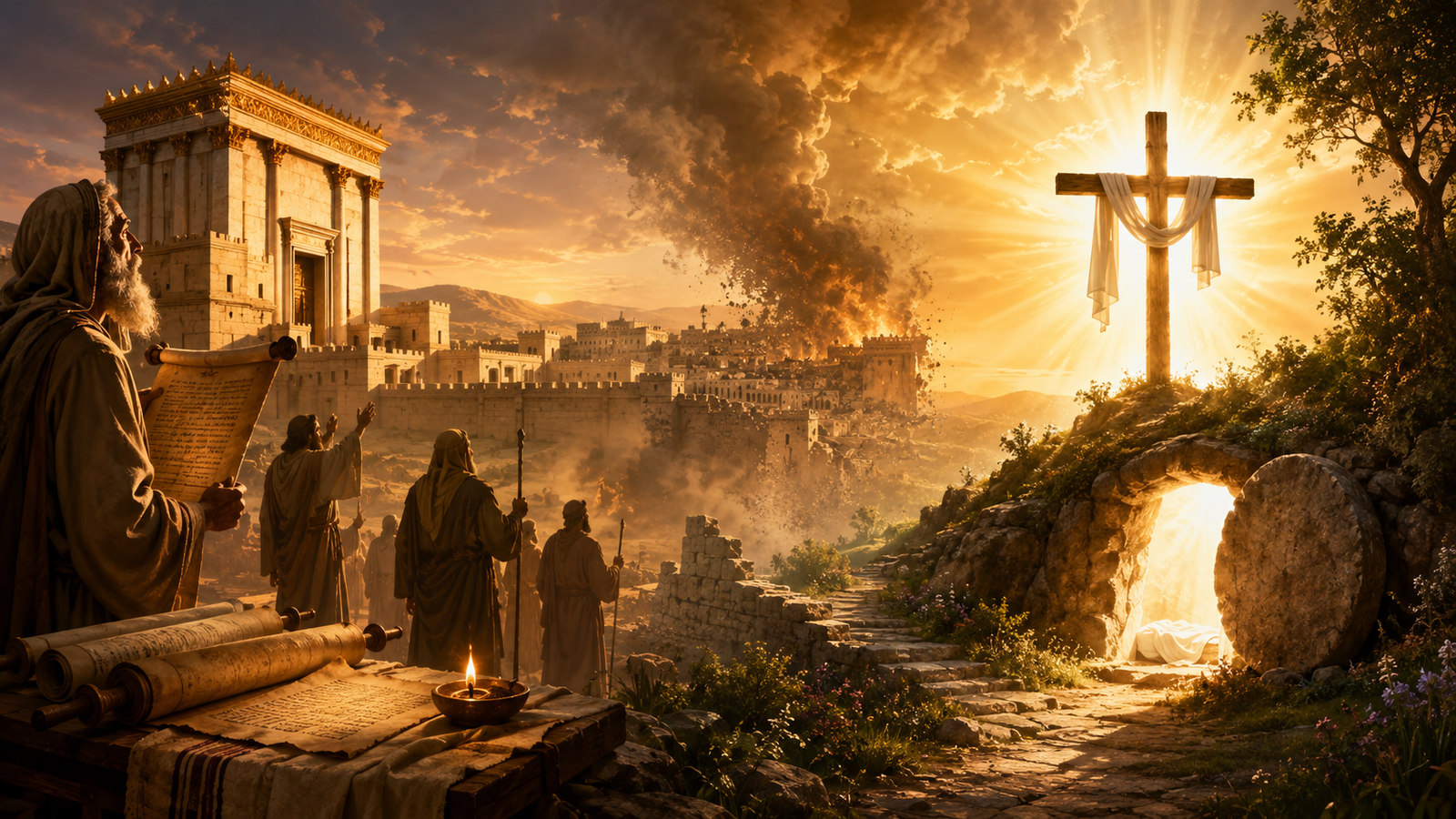
The destruction of the Temple in AD 70 created a historical boundary that permanently changed Judaism and the early Christian movement. The sacrificial system stopped. The priesthood could no longer function as it had. Jerusalem was devastated. The visible center of the old covenant order disappeared. These events match the subject that began the Olivet Discourse: the destruction of the Temple.
Understanding the discourse in its first-century setting also changes its spiritual impact. Instead of producing endless fear about the next war, earthquake, or technological development, it builds confidence in the reliability of Jesus. He accurately warned his disciples about the judgment coming upon their generation. His words were not postponed, redefined, or forgotten.
The discourse also teaches courage. Jesus told his followers that they would face opposition, but he promised that endurance and faithfulness mattered. They were not to follow false messiahs or panic when political instability increased. They were to trust his words even when the surrounding religious establishment rejected them.
Modern believers can still learn deeply from the Olivet Discourse. They can learn to read Scripture in context, resist sensationalism, remain faithful during social upheaval, and trust that Jesus keeps his promises. The application is not found by pretending that every warning was originally addressed to the present generation. It is found by understanding what Jesus accomplished and allowing that fulfillment to strengthen faith today.
The Olivet Discourse is not an unsolved puzzle placed in the Bible to generate fear. It is a historically grounded teaching about covenant judgment, the vindication of Christ, and the reliability of his prophetic word. When the audience, setting, and timeline are respected, the passage becomes clearer. Jesus meant what he said, and the generation that heard him lived to see the world he described come to an end.
This draft follows the client website’s first-century reading of Matthew 24 and the destruction of Jerusalem.